
The Best Medical Alert Systems for Seniors Who Live Alone in 2026
The Best Medical Alert Systems for Seniors Who Live Alone in 2026
Living independently is a priority for millions of older adults. The right medical alert system makes it safer, with no contracts and no complicated setup.
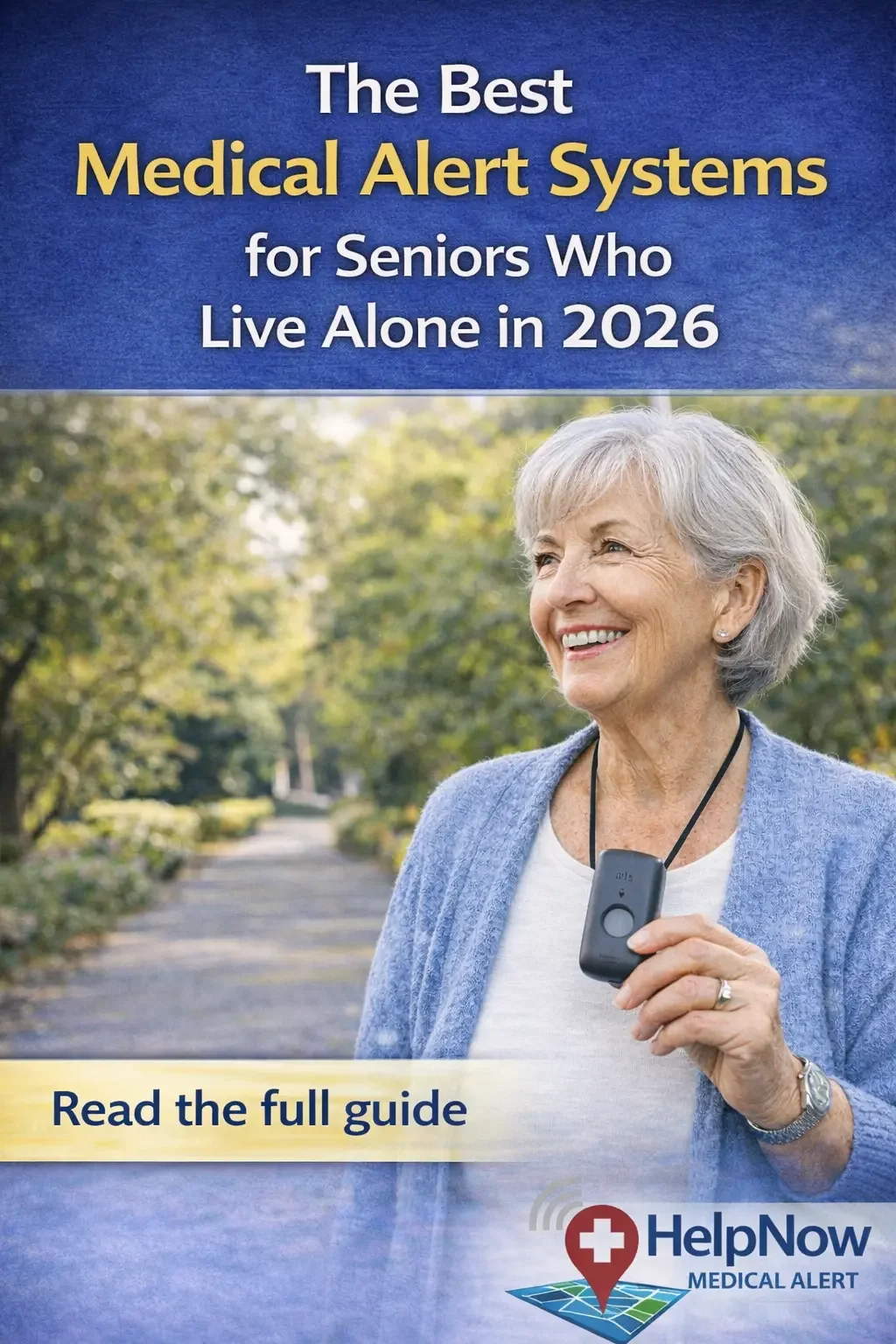
More than 28% of older adults in the United States live alone, and that number continues to grow as the population ages. Living independently is a deeply personal choice, and for most seniors it is the right one. But it also comes with real risks that deserve honest attention.
When something goes wrong, whether a fall, a medical episode, or any other emergency, response time matters enormously. A senior living alone may have no one nearby to call for help. A medical alert system closes that gap. This guide covers what to look for, what features matter most for solo seniors, and why Help Now stands out as a strong option for people who want to maintain their independence with a safety net in place.
If you are still deciding whether now is the right time, our post on 7 signs your aging parent may need a medical alert system is a good starting point. And if cost is on your mind, our guide to monthly costs in 2026 breaks down what is reasonable across the industry.
Why Living Alone Changes the Equation
For a senior living with a spouse or family member, a fall or health emergency often has a witness. Someone calls for help. The response is immediate. For a senior living alone, none of that is guaranteed. A fall in the bathroom, a dizzy spell in the kitchen, or a cardiac event in the middle of the night may go unnoticed for hours, or longer.
Research published in BMC Emergency Medicine found that seniors who live alone face a 50% higher risk of fall-related injury compared to those living with others. A study in Scientific Reports confirmed that living alone is independently associated with a greater likelihood of experiencing a fall, even after accounting for age, health status, and lifestyle differences.
The CDC reports that about 37% of older adults who fall experience an injury that requires medical treatment or restricts their activity for at least one day. For someone home alone, that window between the fall and getting help is the most critical variable of all.
What the research tells us about response time
According to a peer-reviewed study published by the National Institutes of Health, fast intervention after a fall is one of the strongest predictors of outcomes. The longer an older adult remains on the floor without help, the greater the risk of complications including dehydration, pressure injuries, hypothermia, and psychological trauma. A medical alert system addresses this directly by ensuring help is always one button press away.
Features That Matter Most for Solo Seniors
Not every medical alert system is built the same way, and for seniors living alone, certain features carry more weight than they might for someone living with family. Here is what to prioritize.
Two-Way Voice Communication
The ability to speak directly with a monitoring agent through the device is essential. You should not need a phone to call for help. The device itself should be the line of communication.
GPS Location Tracking
For mobile devices, GPS ensures that responders can locate you even if you cannot communicate your address. This matters at home and anywhere else you go.
Automatic Fall Detection
If you cannot press the button, fall detection can trigger a call automatically. Not perfect, but a critically important backup layer for anyone at elevated fall risk. Read our full breakdown on how fall detection works.
Long Battery Life
A device that needs daily charging is a device that might not be charged when you need it. Look for systems that hold a charge for multiple days, or home systems that stay plugged in.
Shower Safe
Many falls happen in the bathroom. A device that cannot be worn in the shower is not doing its job. Ours are rated IP67, which means they are fine in the shower. They are not made for swimming or bathing, and very few medical alert devices are, so ask about that too.
U.S.-Based 24/7 Monitoring
When you press the button at 3am, a real person in the United States should answer. Not an automated system, not an overseas call center. Confirm who is actually monitoring before you buy.
Home System or Mobile System?
For seniors living alone, one of the most important decisions is whether a home-based or mobile system better fits their lifestyle. Both offer strong coverage, but they serve different needs.
Home System vs. Mobile System
Not sure which type is right?
Our Compare All Systems page shows every Help Now option side by side with full feature details so you can make the right call for your situation.
Help Now Systems for Seniors Living Alone
Help Now offers five systems designed for different lifestyles and needs. Here is how each one fits a senior living independently.
The Belle W offers the most comprehensive coverage of any Help Now system. It works as both a wrist device and a lanyard pendant, includes GPS tracking, fall detection, and connects to a caregiver app so family members can stay informed. For a senior living alone, this is the most complete safety solution in the lineup.
The Belle X is a mobile GPS device with fall detection included and an optional caregiver app. It recharges every 6 to 16 days, making it well-suited for seniors who are out of the house regularly and want protection wherever they go.
The Belle S is lightweight, water resistant, and runs up to 45 days on a charge. It is the simplest mobile option in the lineup, ideal for seniors who want straightforward protection without complex features. The extended battery life means one less thing to remember.
The Cellular Home Link connects via cellular, requires no landline, and provides reliable in-home coverage with two-way voice through the base unit. For a senior whose world is primarily within the home, this is a dependable and affordable solution.
What to Watch Out for When Comparing Providers
Not all medical alert companies operate the same way. Before you commit to any provider, our post on 8 questions to ask before buying a medical alert system is worth reading in full. In the meantime, here are the most common red flags to avoid.
Red Flags When Choosing a Provider
- Annual contracts with cancellation fees. A reputable provider earns your business every month. You should never be penalized for leaving.
- Rate increases after sign-up. Some providers raise your monthly rate after 6 or 12 months. Confirm in writing that your rate is locked before signing anything.
- Overseas monitoring centers. When you press the button, someone in the United States who understands your situation should answer. Confirm where monitoring happens.
- Equipment fees or activation charges. Equipment should be free or included. Hidden upfront charges are a warning sign about how the company operates overall.
- No landline coverage on cellular devices. If a provider claims their cellular device requires a landline backup, the technology is outdated. Modern cellular systems work independently.
- Slow shipping. After a fall, a hospital stay, or a health scare is exactly when families start researching medical alert systems. A 2-business-day ship time is what you should expect.
Why Help Now fits seniors living alone
No contracts. No rate increases. Free equipment. Ships in 2 business days. U.S.-based monitoring 24 hours a day. Multiple system options from home-based to fully mobile with GPS and fall detection. Help Now was built for exactly the person this guide is written for: someone who wants to live independently and wants real peace of mind while doing it.
Sources & Further Reading
- CDC: Facts About Falls, Older Adult Fall Prevention
- CDC: Older Adult Falls Data, 2024
- NIH/PMC: Living Alone, Environmental Hazards, and Falls Among U.S. Older Adults
- NIH/PMC: Older People Living Alone — A Predictive Model of Fall Risk
- BMC Emergency Medicine: Injuries and Outcomes from Falls in Elderly Patients
- Scientific Reports: Loneliness, Social Isolation and Falls Among Older People
- NIH/PMC: CDC Injury Center's Response to the Growing Problem of Falls Among Older Adults
- National Council on Aging: Get the Facts on Falls Prevention
Ready to Find the Right System?
Compare every Help Now option side by side. No contracts, free equipment, and ships anywhere in the U.S. in 2 business days.
Compare All SystemsDeciding which system?
Compare all seven side by side, or answer a few quick questions and we will rank them for your situation. You can also call (866) 743-7348 and talk to a person.