
Tax Scams Targeting Seniors: How to Stay Safe This Tax Season
Tax Scams Targeting Seniors: How to Stay Safe This Tax Season
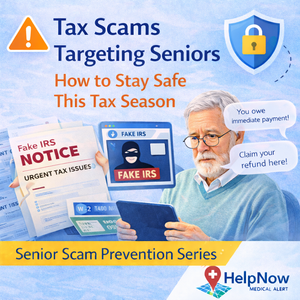
Tax season is a busy time for seniors — and scammers know it. Each year, fake IRS calls, fraudulent refund emails, and phishing websites target older adults hoping to steal personal or financial information. This article in the Help Now Senior Scam Prevention Series explains how to recognize tax scams, protect your identity, and stay safe this season.
1. The most common tax scams in 2026
Fraudsters use a variety of tactics to impersonate the IRS and steal sensitive data. Below are the top tax scams targeting seniors this year:
- Fake IRS calls: Scammers claim to be IRS agents demanding immediate payment through wire transfer or gift cards.
- Refund phishing emails: Messages pretend to be from the IRS or tax software companies requesting personal info to “process a refund.”
- Identity theft during tax filing: Criminals file false returns using stolen Social Security numbers to claim refunds before you do.
- Fake tax preparer scams: Unlicensed individuals offer to “help” file returns and then steal refunds or fees.
- Charity and relief scams: Fraudulent organizations pretend to collect donations related to natural disasters or community aid.
2. How to recognize a tax scam
All IRS tax scams follow a few predictable patterns. Learn these red flags to avoid becoming a target:
- Unexpected calls or emails claiming you owe money to the IRS.
- Threats of arrest, lawsuits, or revoked licenses if you don’t pay immediately.
- Requests for payment through gift cards, cryptocurrency, or wire transfer.
- Emails with poor grammar or urgent phrases like “Final Notice” or “Action Required.”
- Unfamiliar sender addresses or links that don’t end in “.gov.”
3. What to do if you receive a suspicious IRS call or email
Stay calm and verify before you act. If you get a call or message you believe is a scam:
- Hang up or delete the email immediately — do not reply or click links.
- Call the official IRS number at 1-800-829-1040 to confirm your tax status.
- Report the incident to the Treasury Inspector General for Tax Administration (TIGTA).
- Forward suspicious emails to phishing@irs.gov.
- Inform your bank if you shared any financial details so they can monitor your accounts.
4. How to protect your tax information and identity
Simple preventive steps can significantly reduce your risk of tax fraud:
- File your tax return as early as possible to prevent identity theft filings.
- Use only official IRS-approved websites and trusted tax preparers.
- Never send Social Security numbers or tax documents through email.
- Use strong passwords and enable two-factor authentication on financial accounts.
- Shred old tax records and personal documents before disposing of them.
5. How caregivers can help seniors avoid tax fraud
Caregivers and family members can play a major role in preventing tax fraud. Encourage open conversations and routine financial check-ins.
- Remind seniors that the IRS communicates by mail first — never by text or call.
- Review emails and voicemails that sound urgent or financially demanding.
- Assist with secure online filing or use verified tax software.
- Bookmark the official IRS website (IRS.gov) for reference and verification.
6. Help Now supports safe and independent living
Awareness and connection are the best defenses against fraud. In addition to education, Help Now Medical Alert Systems offer 24/7 access to trained professionals who can assist in emergencies. Whether at home or away, seniors can stay confident knowing help is always just a button away.
Compare systems and features on the Help Now comparison page.
Checklist: Staying safe from tax scams
Recognize
- Calls demanding immediate payment
- Emails with refund links or attachments
- Fake IRS IDs or addresses
React
- Hang up and report the scam
- Verify with the official IRS number
- Secure financial accounts
Prevent
- File early each tax season
- Use strong passwords and secure software
- Stay educated about new scams
Stay informed this tax season
Tax scams can be stressful, but knowledge and awareness make all the difference. By staying alert and verifying information before taking action, seniors can protect their money and peace of mind. Follow the Help Now Senior Scam Prevention Series for upcoming articles on romance scams, financial protection tips, and caregiver guides in 2026.
Compare Medical Alert Systems