
Romance Scams Targeting Seniors: How to Spot Red Flags Before Valentine’s Day
Romance Scams Targeting Seniors: How to Spot Red Flags Before Valentine’s Day
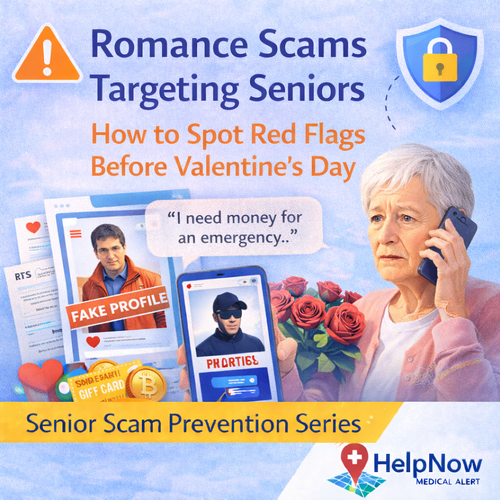
Valentine’s Day can be a wonderful reminder to connect with people you care about. It is also a time when scammers increase outreach on dating sites, social media, texting apps, and email. Romance scams targeting seniors often start with friendly conversation and quickly turn into pressure for money, gift cards, or personal information.
Why romance scams target seniors
Romance scammers look for people who are kind, trusting, and willing to help. Seniors may be targeted because scammers assume there is stable income, savings, or a desire for companionship. The fraud can happen through online dating, Facebook messages, email, or even phone calls. The common thread is emotional manipulation.
This post is part of the Help Now Senior Scam Prevention Series. If you missed earlier posts, start here:
Common romance scam patterns
Most romance scams follow a predictable playbook. Knowing the pattern helps seniors and families recognize trouble early.
- Fast emotional bonding: “I have never felt this way before” within days.
- Moving off platform: They quickly ask to switch to texting apps or email.
- Excuses to avoid meeting: Travel, military deployment, offshore work, or emergencies.
- Money request: A sudden crisis requiring help, often framed as temporary.
- Isolation: They discourage talking to friends or family.
Red flags seniors can spot immediately
Use this list as a quick screen for romance scams targeting seniors. One red flag may not prove a scam, but multiple red flags should trigger a hard stop.
- They claim to be overseas or “temporarily away” and cannot meet.
- They ask for money, gift cards, crypto, or help with “fees” or “taxes.”
- They want banking details, passwords, or copies of IDs.
- They refuse video calls or always have an excuse.
- Their photos look too perfect or appear in multiple profiles.
- They use dramatic stories to create urgency and pressure.
What to do if you suspect a romance scam
If you think you or a loved one may be dealing with a scammer, take these steps quickly and calmly:
- Stop sending money and stop sharing personal information.
- Save evidence such as screenshots, emails, usernames, and phone numbers.
- Block and report the account on the dating site or social platform.
- Talk to a trusted person and share the conversation history.
- Report fraud to the FTC at ReportFraud.ftc.gov.
If money was sent, contact the bank or card issuer immediately. The sooner you act, the better the chance of limiting damage.
How family members and caregivers can help
Romance scams can be emotionally complicated. The goal is safety, not shame. Keep the approach respectful and supportive.
- Ask open questions like “How did you meet?” and “Have you video chatted?”
- Offer to help verify the person using a video call.
- Encourage a rule: no money, no gift cards, no crypto, no exceptions.
- Help set stronger privacy settings on social media accounts.
- Schedule regular check-ins, especially during holidays and weekends.
Staying connected reduces vulnerability
Scammers rely on isolation. Seniors who stay connected to friends, family, and trusted support networks are less likely to become targets. Many families use a combination of practical safety planning and reliable support tools to protect independence.
A Help Now Medical Alert System supports independent living with 24/7 access to trained professionals. It is not a scam prevention tool, but it can provide peace of mind in stressful situations or emergencies. Compare options here:
Checklist: Romance scam prevention for seniors
Before trusting
- Require video calls
- Confirm real identity
- Keep conversations on platform
If money is mentioned
- Stop immediately
- Talk to family or a trusted friend
- Report the account
Ongoing habits
- Do not share personal documents
- Use strong passwords
- Stay connected and ask questions
Next in the Senior Scam Prevention Series
Next week we will cover a practical topic that protects day-to-day finances: how to avoid gift card scams, payment app scams, and fake invoices. These tactics often overlap with romance scams and tax scams.
Compare Medical Alert SystemsIf you are looking at a medical alert system
Compare all seven systems, answer a few questions for a recommendation, or see what they cost. No contracts, and the equipment is free. Questions? (866) 743-7348.